
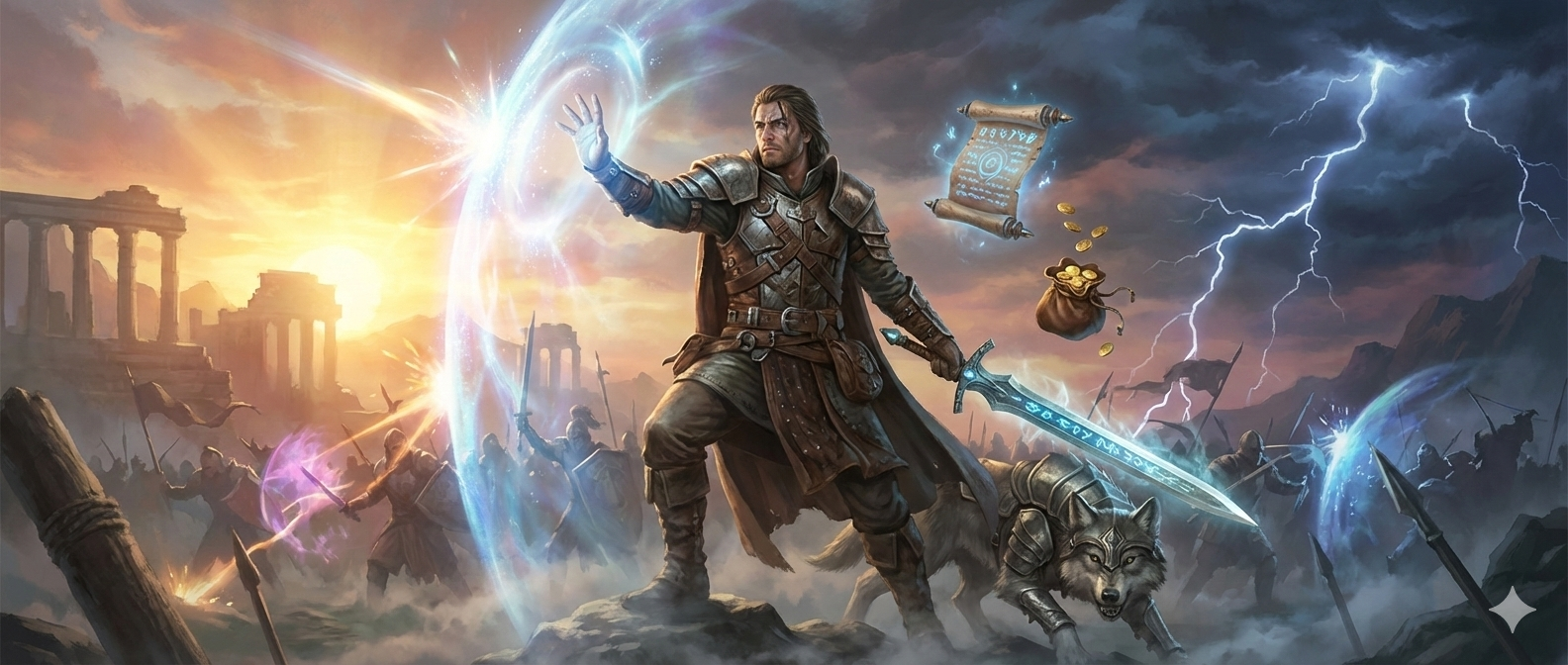
In the world of Magic: The Gathering, most decks pick a side. Aggro decks want to end the game by turn four. Control decks want to stop anything from happening until turn ten. But then there is the Midrange Deck - the versatile, powerful, and often most rewarding strategy for players who want an answer to everything.
Veterans call midrange 'pure Magic' for a reason: no gimmicks to hide behind, just combat math, resource management, and out-playing whoever's across the table, card for card. When a midrange mirror goes long, the better player wins. That's the appeal.
What is a Midrange Deck?
A Midrange deck occupies the middle of the mana curve. It doesn't have the hyper-fast starts of Aggro, nor the infinite patience of Control. Instead, it plays the "Best Cards" available in its colors.
The Philosophy: "The Chameleon"
Against Aggro: You play the role of the Control deck. Use your superior creatures and removal to stabilize the board and survive the initial rush.
Against Control: You play the role of the Aggro deck. Apply pressure early enough to force them to react, trying to win before they can establish dominance.
The Core Pillars of Midrange
To build a successful Midrange deck from your collection, look for cards that fit these three criteria.
High Individual Card Quality
Every Card a Threat
In a Combo deck, a card might be useless unless you find its partner. In a Midrange deck, every card must be a threat on its own.
Example: A 4/5 creature that also draws you a card when it enters is Midrange gold.
The Power of "2-for-1s"
Small Advantages Win Games
Midrange wins by slowly accumulating advantages. The best way is with cards that handle an opponent's threat while leaving you with something behind.
Example: A creature that kills an opponent's creature when it enters the battlefield.
Flexibility (The Toolbox)
Adapt to Any Situation
Because Midrange needs to adapt to different opponents, your spells need to be flexible. Removal that hits creatures or planeswalkers is ideal.
Look for: Modal spells, versatile creatures, and cards with multiple uses.
The "Pivot": Who's the Beatdown?
The most important skill for a Midrange player is identifying your role within the first two turns.
Opponent Plays Turn 1 Goblin?
You are now the Defensive player. Your goal is to kill their stuff and stay alive until your bigger threats take over.
Opponent Plays Tapped Land and Passes?
You are now the Aggressive player. Start casting creatures and attacking immediately before they set up.
Midrange decks are the only ones that can "pivot" between these two roles seamlessly.
Popular Midrange Archetypes
Different color combinations bring different flavors of the Midrange strategy.
Jund Black/Red/Green
Bloodbraid ElfBloodbraid Elf
The most legendary Midrange pairing in history. Focuses on stripping the opponent's hand with discard, killing creatures with removal, and winning with efficient green creatures.
Golgari "The Rock" Black/Green
Grist, the Hunger TideGrist, the Hunger Tide
Focuses heavily on the graveyard and resilience. Uses Black for removal and Green to bring permanents back or create "Value Engines." Incredibly hard to kill.
Esper Midrange White/Blue/Black
Raffine, Scheming SeerRaffine, Scheming Seer
Uses Blue to add "Information Advantage." Might use counterspells, but unlike Control, uses them to protect threats rather than just stopping the opponent.
Strategy: How to Play Midrange
Master the art of reading the game and adapting your role.
Identify Your Role (Who's the Beatdown?)
Within the first two turns, determine if you're the aggressive or defensive player based on your opponent's plays.
Play the Control Role vs Aggro
Use your superior creatures and removal to stabilize the board. Once they run out of steam, your bigger creatures take over.
Play the Aggro Role vs Control
Apply pressure early enough to force them to react, trying to win before they establish total dominance.
Formats: Where Midrange Shines
Standard
Midrange is often the "King of Standard." Aetherdrift's "Modified" creatures remain popular, but Lorwyn Eclipsed has added powerful Kithkin and Faerie value engines that grind out advantages. Foundations reprints of high-quality removal and midrange staples have made the archetype more accessible and consistent.
Pioneer and Modern
In these faster formats, Midrange acts as the "Police." It prevents Combo decks from being too greedy and stops Aggro from running over the format. Decks like Rakdos Midrange have been staples for years because they simply have no "bad matchups."
Commander (EDH)
In Commander, Midrange is often the safest way to play. By not being the fastest (Aggro) or most annoying (Control), you can stay "under the radar." Build a solid board state, draw cards, and wait for the right moment to strike.
Tips for Building Your First Midrange Deck
Watch Your Curve
You want your "peak" at 3 and 4 mana. This ensures plays in the early game but powerful enough cards to win late.
Don't Skimp on Lands
Midrange decks are mana-hungry. You need to hit your first four land drops every game. Run at least 24 or 25 lands.
Balance Your Answers
Make sure you have a mix of "Point Removal" (for single threats) and "Card Draw" (to find more threats).
Does Your Collection Have the Quality?
The beauty of Midrange is that it's often hiding in plain sight. Many "Bulk Rares" or powerful Uncommons that don't fit into a specific Tribe or Combo are actually perfect Midrange pieces.
Our Deck Builder Tool is optimized to look for Card Quality Scores. It analyzes the stats, abilities, and "2-for-1" potential of your cards to help you build a deck that is greater than the sum of its parts.
Card images and card data courtesy of Scryfall. Magic: The Gathering is © Wizards of the Coast. ManaBuilder is unaffiliated with Wizards of the Coast.