
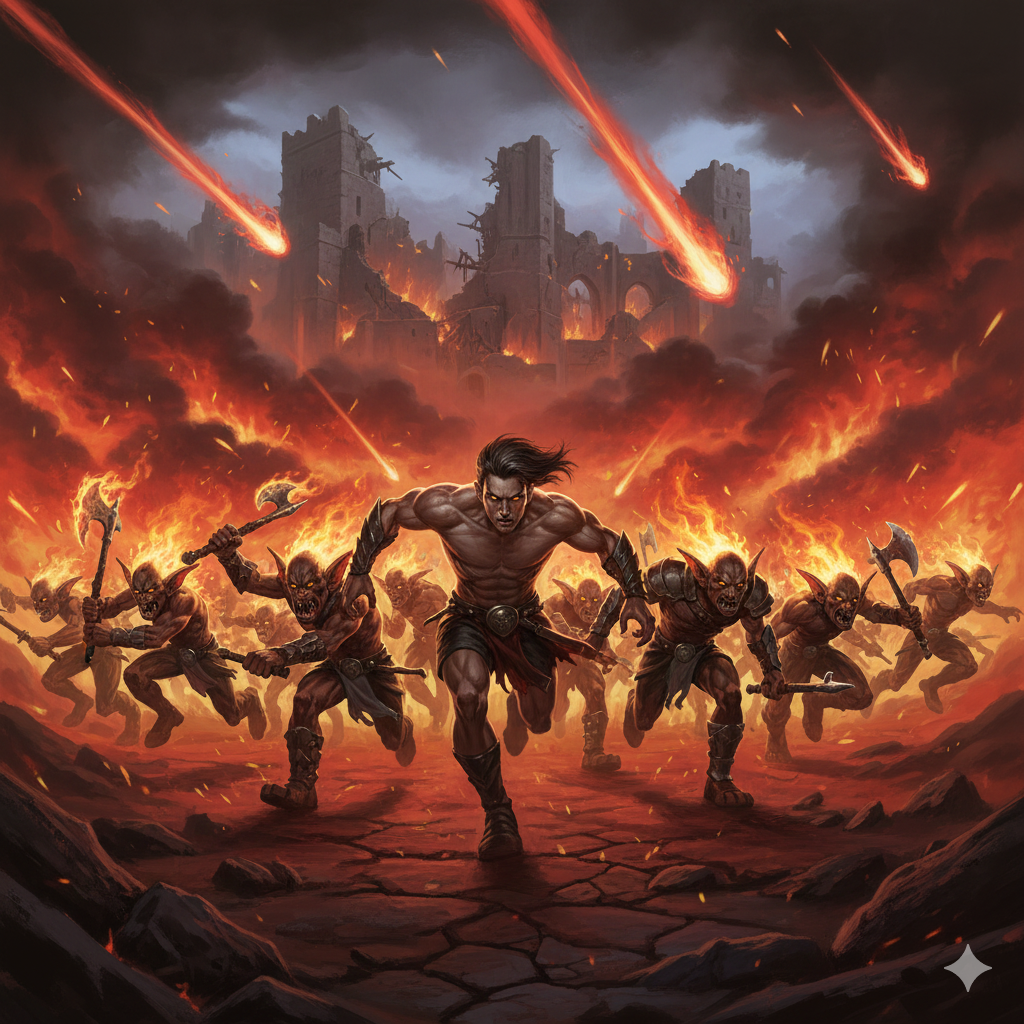
Aggro (short for Aggressive) is the most straightforward and often the most effective strategy for new players. While other players are busy drawing cards, setting up complex combos, or waiting for turn ten to play a giant dragon, the Aggro player has one goal: Win fast.
If you like fast games, overwhelming your opponent before they can react, and "turning cards sideways" to attack, Aggro is the archetype for you.
What is an Aggro Deck?
An Aggro deck is built on the principle of Tempo. It uses low-cost, efficient creatures and direct damage spells to apply pressure from the very first turn.
You Are Playing a "Clock"
You are asking your opponent: "I am going to kill you in five turns. Can you find a way to stop me before time runs out?" If they can't find their defensive spells or big blockers in time, they lose - even with a hand full of powerful cards they never got to cast.
The Core Elements of Aggro
To build a successful Aggro deck from your collection, you need to focus on three specific things.
The Low Mana Curve
The 1-Drop King
You cannot afford to skip your first or second turn. Have 8–12 one-mana cards to start dealing damage on Turn 1.
Most Aggro decks stop their curve at 4 mana. Anything costing 5+ is usually too slow.
Efficiency Over Power
Speed > Size
A 2/1 for 1 mana is often better than a 5/5 for 5 mana because it starts attacking four turns earlier.
Keywords to look for: Haste, Flying, and Prowess.
"Reach" (The Finisher)
Direct Damage
When your opponent plays a big blocker, "Reach" cards deal final damage directly without needing to attack.
Example: Red "Burn" spells like Lightning StrikeLightning Strike or ShockShock.
Popular Aggro Archetypes
Different flavors of speed and aggression, each with their own approach to victory.
Mono-Red Aggro "Red Deck Wins"
Monastery SwiftspearMonastery Swiftspear
The most famous Aggro deck in history. Uses fast Goblins, creatures with Haste, and lots of fire spells (Burn). The fastest deck in the game.
White Weenie "Go Wide"
Thalia, Guardian of ThrabenThalia, Guardian of Thraben
Uses many tiny, cheap white creatures (Humans, Soldiers, Cats) and "Anthem" effects (+1/+1 to all) to turn a swarm of 1/1s into a lethal army.
Gruul Stompy Red/Green
Gruul SpellbreakerGruul Spellbreaker
"Big Aggro" style. Uses Green for larger-than-average creatures early, then Red to give them Haste or clear blockers.
Strategy: How to Play Aggro
Playing Aggro seems simple, but there is a hidden layer of strategy called "The Beatdown."
Empty Your Hand
Get your threats onto the table as fast as mana allows. Don't hold back.
Don't Trade (Unless Necessary)
Keep your creatures alive to keep attacking. Only "trade" if it removes a creature that would prevent you from winning.
Identify the Turn
Every Aggro deck has a "Goldfish Turn" (usually Turn 4-5). If the game goes to Turn 10, your chances drop significantly.
Aggro in Modern Magic (2026)
Aggro has received huge boosts from Aetherdrift, Tarkir: Dragonstorm, Lorwyn Eclipsed, and Foundations.
Standard
Aetherdrift vehicles and "modified" creatures remain fast, but Lorwyn Eclipsed Kithkin offer a new ultra-efficient tribal aggro shell. Foundations reprinted burn staples that give Red Aggro its sharpest finishers in years.
Commander (EDH)
Aggro is harder in Commander (120 total damage to 3 opponents). To win, you need "Group Slug" effects - cards that deal damage to everyone at once.
Pioneer/Modern
Efficiency is at an all-time high. Decks like Boros Convoke can put 10 power onto the battlefield by Turn 2.
Is an Aggro Deck Right for You?
You want fast games: You'd rather play five 10-minute games than one 50-minute game.
You like being "Proactive": You want to force your opponent to react to you.
You are on a budget: Aggro decks are often the cheapest to build because they rely on efficient Commons and Uncommons rather than expensive, slow Legendaries.
Card images and card data courtesy of Scryfall. Magic: The Gathering is © Wizards of the Coast. ManaBuilder is unaffiliated with Wizards of the Coast.