
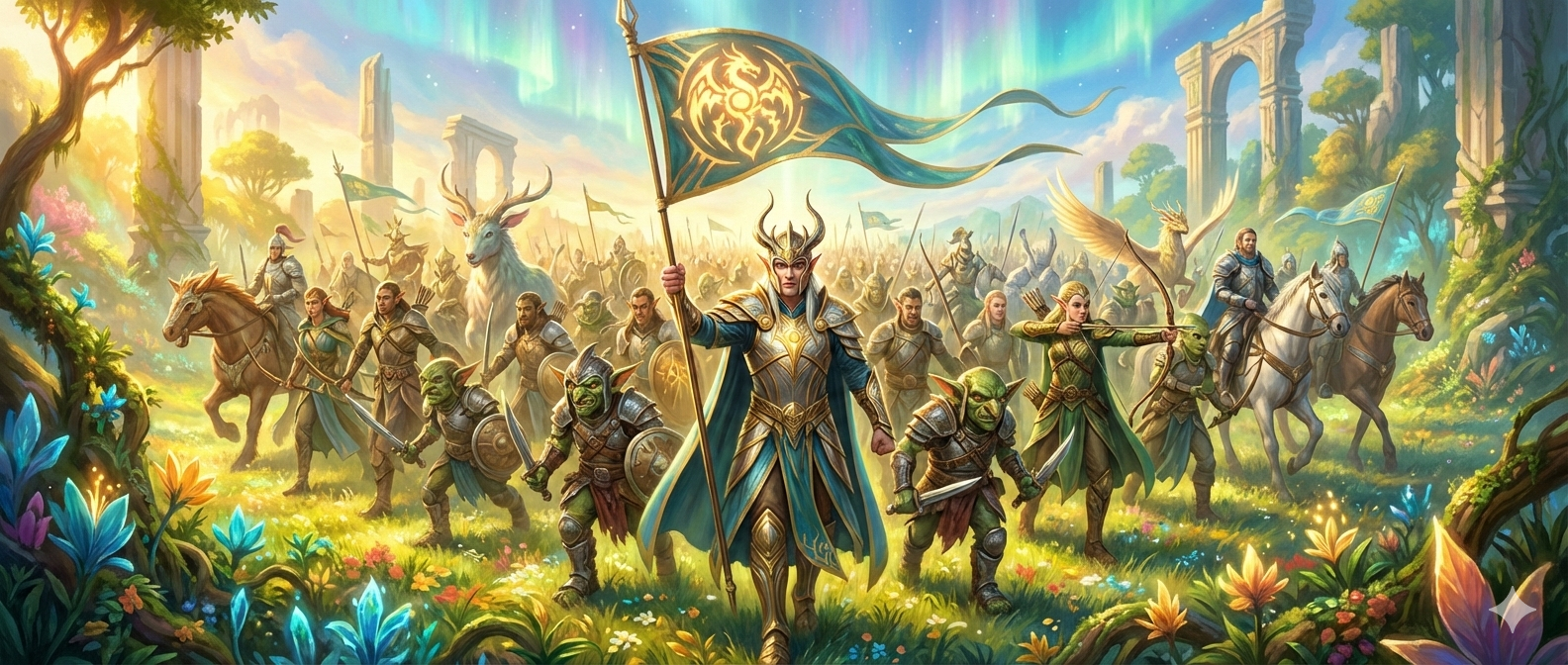
A tribal deck (officially "Kindred" since 2023) is an MTG deck built around one creature type - Elves, Goblins, Zombies - where cards reward you for controlling more creatures of that type. The rest of this guide covers how the pieces fit together and which tribes are easiest to start with.
Staring at a few hundred loose cards and trying to pick a deck is the hardest part of Magic - the game gives you infinite options and no starting point. Tribal is the starting point.
For beginners, the absolute best way to learn deck building - and the concept of "synergy" - is to build a Tribal Deck.
It's one of the most popular, flavorful, and enduring archetypes in Magic's history. Whether you want to lead a horde of screeching Goblins, a graceful conclave of Elves, or a terrifying flight of Dragons, Tribal is where you start. The 2026 release of Lorwyn Eclipsed has supercharged tribal strategies with Faeries, Kithkin, Treefolk, Changelings, and Elementals all receiving deep support - making this the best time in years to build a tribal deck.
What is a Tribal Deck?
At its core, a Tribal deck (recently referred to by Wizards of the Coast as a "Kindred" deck) is a strategy focused almost entirely on a single Creature Type.
Every creature card in Magic has a type listed on the central type line, such as "Creature - Elf Warrior" or "Creature - Zombie Wizard."
A Tribal deck doesn't just include a bunch of Elves because you like the art. It includes them because the cards in the deck are mechanically designed to reward you for having more of that specific type on the battlefield.
The philosophy of a tribal deck is simple: The whole is greater than the sum of its parts.
A single 1/1 Goblin isn't scary. But five 1/1 Goblins that are all being granted +1/+1 and "Haste" by their Goblin ChieftainGoblin Chieftain? That's a game-ending threat.
Why Build a Tribal Deck First?
If you are new to deck building, Tribal is the perfect starting point for three reasons:
1. Built-in Direction
The hardest part of building a deck is figuring out the theme. With Tribal, the theme is handed to you. If you open a cool card that says, "Other Merfolk you control get +1/+1," the game has just given you a quest: Find all your best Merfolk cards and put them together. The deck practically builds itself.
2. Learning Synergy
Synergy is when two or more cards work together to create an effect stronger than they would have individually. Tribal decks are the clearest example of this. You quickly learn that a mediocre creature can become a powerhouse if it has the right support from its kin.
3. Incredible Flavor
Magic is a fantasy game. There is something immensely satisfying about commanding a unified thematic army. Leading a legion of undead Zombies against your opponent's forces feels epic and tells a great story during the game.
The Anatomy of a Tribal Deck
Not all piles of similar creatures make a good deck. A functional Tribal deck usually relies on three key components working in harmony:
The Bodies (The Grunts)
These are the bread and butter of your army. They are usually low-cost, efficient creatures that get onto the battlefield early. By themselves, they might not be impressive, but their main job is to exist on the battlefield so they can be buffed later.
Example: A simple 1-mana 1/1 Elf that produces green mana.
The "Lords" (The Buffs)
This is the most important component. In Magic slang, a "Lord" is any creature that grants a static bonus to other creatures of its type. Historically, cards like "Lord of Atlantis" gave all Merfolk +1/+1. Whenever you see a creature that says "Other [Creature Type] you control get +1/+1," you have found a Lord. You usually want as many of these effects as possible.
The Tribal Payoffs (The Spells)
These are often non-creature spells that get better the more of a certain creature type you have.
Example: A Sorcery that says, "Draw a card for each Elf you control." If you have one Elf, it's bad. If you have ten Elves, it wins you the game.
Popular Tribes for Beginners
While there are hundreds of creature types in Magic, some have received decades of support, making them easier to build. Lorwyn Eclipsed (2026) added major new tribes including Faeries, Kithkin, and Treefolk, while Foundations reprinted key tribal staples.
Elvish ArchdruidElvish Archdruid
Playstyle: Explosive Ramp and Swarm
Elves are masters of generating immense amounts of mana very quickly. You play small elves that tap for mana, use that mana to play "Lords" that make your small elves huge, and then cast a massive, game-ending spell.
Goblin ChieftainGoblin Chieftain
Playstyle: Hyper-Aggressive and Chaotic
Goblins are fast, cheap, and numerous. They often have "Haste" (they can attack right away). Goblin decks try to overwhelm the opponent in the first few turns before they can set up a defense. They also love sacrificing their own kind for damage.
Lord of the UndeadLord of the Undead
Playstyle: Resilient and Grinding
Zombies are slower than Goblins but much harder to kill. Zombie tribal decks excel at bringing their creatures back from the graveyard. You can kill their army, but they will just rise again next turn.
A Note on Formats: Standard vs. Commander
How you build your tribal deck depends heavily on the "Format" you are playing.
60-Card Formats
(Kitchen Table, Standard)
You want consistency. You should identify the best 3 or 4 creatures in your tribe and run four copies of each. Your goal is usually speed and efficiency, curving out from turn 1 to turn 4 to overwhelm the opponent.
Commander (EDH)
Most popular home for Tribal
Because you need 100 unique cards and games last longer, you can play higher-cost, flashier tribal cards like gigantic Dragons or Dinosaurs. You also get a "Commander" that starts outside the deck, guaranteeing you always have access to your tribe's leader.
Card images and card data courtesy of Scryfall. Magic: The Gathering is © Wizards of the Coast. ManaBuilder is unaffiliated with Wizards of the Coast.
Continue learning
Ready to Gather Your Army?
Your tribe is probably already in your box - most collections lean toward some creature type without the owner ever deciding to. Upload your cards and the builder will count your tribes, find your lords, and show you which army you've accidentally been assembling all along.